Strategies for Meeting the AACN Essentials: A Practical Approach for Nurse Practitioner Programs
- Dec. 1, 2025
Share:
By Jennifer Smith, DNP, APRN, FNP-C, ENP-C
The American Association of Colleges of Nursing (AACN) developed The Essentials: Core Competencies for Professional Nursing Education as a foundational framework for nursing education, to ensure that graduates are practice ready and prepared to meet the demands of today’s complex healthcare landscape.
The Essentials reflect important healthcare practices such as team-based care, interprofessional collaboration, social determinants of health, and individualized, patient-centered care. The ability to incorporate these essential skills is an expectation of all graduate-level nurses. Thus, nurse practitioner programs are tasked with implementing the Essentials into their curricula.
Programs that do not have competency-based education in place are expected to adopt this model (find an FAQ document here). This task can feel overwhelming given the complexity and breadth of the Essentials requirements. But by taking a practical approach and integrating resources that support faculty and student success, your program can adhere to AACN requirements.
Background, Purpose & Structure of the Essentials
Competency-based education is considered the foundation for practice readiness because it prepares students for real-world challenges. AACN — as well as other education and credentialing bodies — recognize competency as a requirement for nursing practice at all levels.
AACN developed the Essentials to provide a national consensus-based framework of professional standards for baccalaureate and graduate nursing education programs. They are structured around 10 domains of nursing practice and Level 1 and Level 2 subcompetencies.
- Level 1 subcompetencies are developed in prelicensure undergraduate nursing programs.
- Level 2 subcompetencies build on foundational (Level 1) knowledge and skills to achieve the knowledge skill required in advanced nursing practice.
This article focuses on education requirements for advanced practice nursing and the 8 core Level 2 subcompetencies that academic programs must develops.
AACN identifies the following 10 domains as progression indicators — descriptive, observable behaviors that illustrate competency development:
- Knowledge for nursing practice
- Person-centered care
- Population health
- Scholarship for the nursing discipline
- Quality and safety
- Interprofessional partnerships
- Systems-based practice
- Informatics and healthcare technologies
- Professionalism
- Personal, professional and leadership development.
AACN also has identified 8 competencies that represent core areas of nursing knowledge:
- Clinical judgment
- Communication
- Compassionate care
- Diversity, equity and inclusion
- Ethics
- Evidence based-practice
- Health policy
- Social determinants of health.
Subcompetencies follow and are further divided into entry level and advanced level nursing practice. (See this document for more detail.) These subcompetencies guide the development of the respective competencies. Although these subcompetencies are not formally required, they are an expectation of all nursing programs. Demonstrating that your students have attained these competencies offers critical evidence required for program reaccreditation.
A Meaningful Approach to Curriculum Design
To meet the requirements of the Essentials, programs must revise and reshape multiple courses throughout a program of study. This widespread implementation provides students with repeated exposure to key concepts across a variety of content and complexity levels, while still maintaining individual program flexibility.
The Essentials do not set an expectation that each course individually incorporates all domains and subcompetencies — nor do they require a standardized curriculum. However, many APRN programs are requiring faculty to map their curriculum to the Essentials competencies to prove to accrediting bodies that their education is competency based.
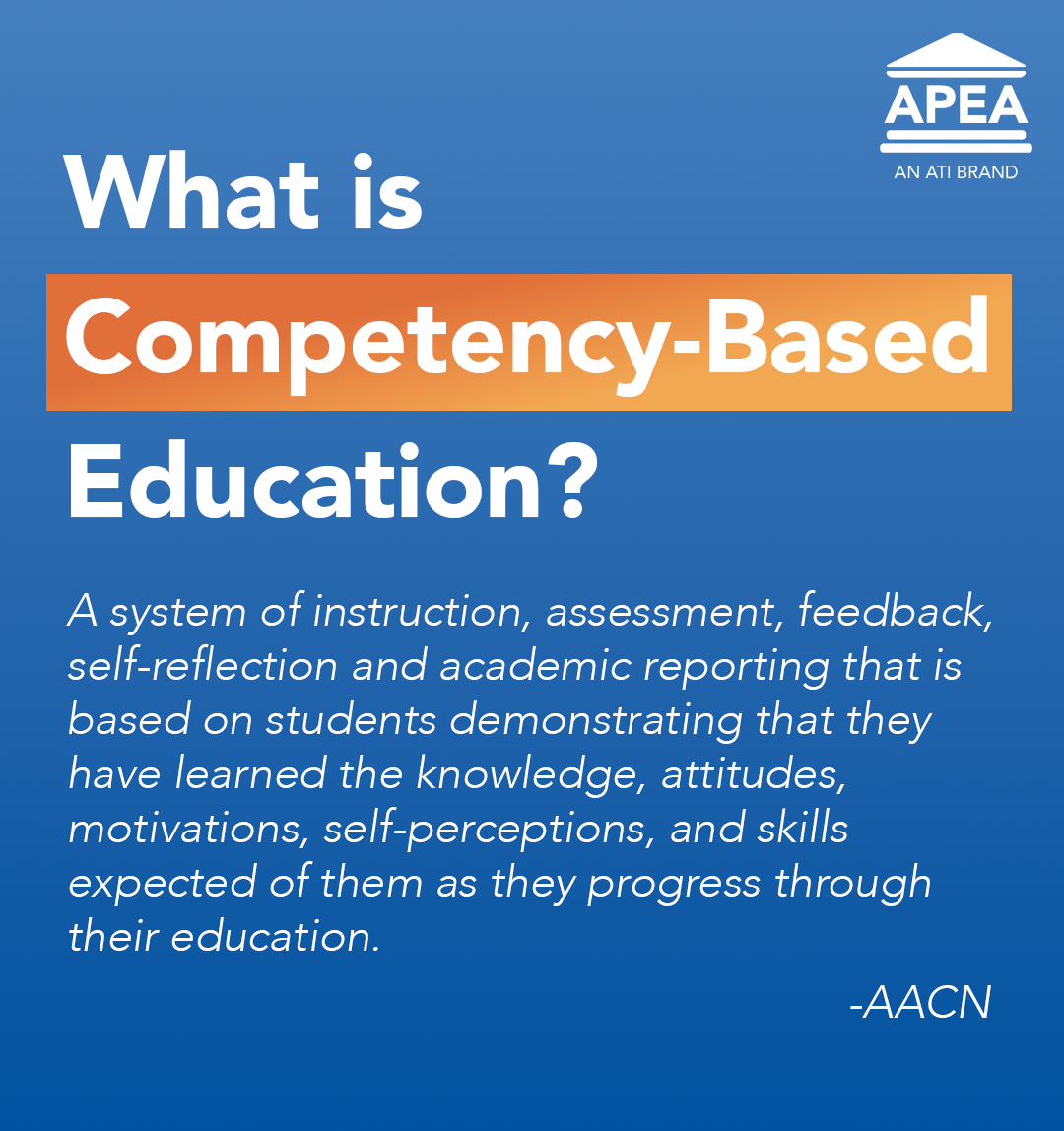
Given that the driving theme of the Essentials is competency-based education, a common question is: What is competency-based education and why is it so important? Competency-based education develops the skills and knowledge a student must master prior to graduation. It shifts the focus from completing credit hours and taking exams to demonstrating clinical practice readiness.
In competency-based programs, students have the opportunity to showcase their knowledge by applying it in clinical simulations, projects and faculty observations. Competency-based education has been associated with higher levels of student satisfaction and program completion, as well as skills mastery and greater faculty development (AACN 2021, Mani 2025, NLN 2023).
The Hottest Topic? Clinical Hours
Perhaps no topic related to the Essentials has generated as much discussion as clinical hours for NP students. All graduate nursing programs must meet specific clinical practice hour requirements to ensure competency at advanced levels, and multiple organizations have set clinical hour benchmarks.
- The Essentials require a minimum of 500 clinical hours for all graduate-level nurses. This includes specialties such as nursing education, leadership, and informatics. These hours can be comprised of direct and indirect care.
- The 2022 standards published by the National Task Force for Quality Nurse Practitioner Education call for 750 direct care hours within the student’s specialty area of study. As a result, many NP programs have changed their clinical requirement to 750 hours.
- The Commission on Collegiate Nursing Education (CCNE) requires the programs it accredits to provide a minimum of 1,000 post-baccalaureate practice hours (specifically for DNP programs). These hours must be completed within a supervised academic setting, ensuring that students gain the hands-on experience needed to achieve advanced nursing competencies.
While a discrepancy exists between the recommendations by NONPF and AACN, most NP programs require 750 supervised clinical hours in accordance with the NONPF guidelines for entry into advanced practice.
In accordance with recommendations from CCNE, most post-master’s DNP programs require 1,000 post-baccalaureate hours, 500 of which must be in a supervised academic setting. Students can transfer these hours from their master's program and fulfill the remaining hours through the implementation of their DNP project and their work as a certified nurse practitioner. However, students who did not complete supervised clinical hours during their master’s program may need to perform additional supervised clinical hours to earn their DNP.
Mapping Your Curriculum With Experts
Determining whether your program curricula meet the Essentials and then documenting it can be a challenging and overwhelming task for faculty. APEA’s program and faculty consultants can help simplify this complex process.
APEA resources can be integrated seamlessly into existing FNP, AGPCNP, PMHNP, AGACNP, PNP and WHNP curricula. Content within APEA learning and teaching materials, question banks, formative and summative assessments, and certification review courses can be mapped to competencies identified in the Essentials and the NTF Standards.
These resources include:
- Board-style study questions with quiz features: MyQBank (3P banks plus track-specific banks)
- Competency exams including tests that measure 3P mastery
- Predictive exams that determine student readiness
- Practice questions with detailed rationales: FNP and AGPCNP Certification Questions book
- Evidence-based support for clinical decision making: Clinical Guidelines in Primary Care
- Certification review courses (live and on demand).
The content in APEA resources reflects the 10 domains identified by AACN, to ensure students learn and gain competency in them. Each resource is mapped to the corresponding Level 2 subcompetencies.
This product mapping lightens the load on faculty by taking over the tedious and time-consuming task of identifying which Essentials requirements are matched with curriculum. The mapping also assists in the development of new content to meet any identified program gaps.
APEA product mapping also provides documentation and evidence for use during site visits and accreditation. Faculty can leverage APEA courses and assessments to enhance their teaching methods, ensuring that students are exposed to the breadth of the Essentials and prepared for graduation and beyond. In addition to ensuring practice readiness, APEA’s evidence-based resources and comprehensive faculty support help maintain program quality and accreditation compliance.
Your Competency-Based Curriculum Is Within Reach
Competency-based education requirements in the Essentials are a guide and framework for advanced practice nursing programs. The long-term benefits of program alignment with standards such as the Essentials are profound. Graduates are highly skilled and ready to meet the demands of the modern healthcare environment. Their preparedness translates into outstanding patient care, better career opportunities and the ability to adapt to evolving healthcare trends such as interprofessional collaboration and technology integration.
By integrating resources mapped to nurse practitioner competencies, such as those developed by APEA, programs can readily demonstrate alignment with the AACN Essentials. Such partnerships enhance educational outcomes and ensure graduates are ready to meet the needs of an increasingly complex and diverse patient population.
Ultimately, the commitment to aligning with the AACN Essentials represents a dedication to excellence in nursing education that fosters a generation of nurses who are ready to lead, innovate and make a meaningful impact in healthcare.
About the Author: Dr. Jennifer Smith is a Nurse Practitioner Education Specialist for Advanced Practice Education Associates (APEA). In this role, she teaches the APEA Review Course & Clinical Update, a comprehensive course that both prepares NP students for certification and provides important clinical updates to practicing NPs. In addition, Dr. Smith collaborates with NP faculty and students to help them achieve strong outcomes. She is dually certified in family and emergency medicine and worked in clinical and education roles before joining APEA in 2023.
References
American Association of Colleges of Nursing. (2021). Guiding principles for competency-based education and assessment. https://www.aacnnursing.org/Portals/0/PDFs/Essentials/Guiding-Principles-for-CBE-Assessment.pdf
American Association of Colleges of Nursing. (n.d.) What is Competency-Based Education? https://www.aacnnursing.org/essentials/tool-kit/competency-based-education
Mani ZA. (2025). Transitioning to competency-based education in nursing: A scoping review of curriculum review and revision strategies. BMC Nursing. https://doi.org/10.1186/s12912-025-03319-y
National League for Nursing. (2023). NLN Vision Statement: Integrating competency-based education in the nursing curriculum. https://www.nln.org/docs/default-source/default-document-library/vision-series_integrating-competency-based-education-in-the-nursing-curriculumd6eb0a1e-1f8b-4d60-bc4f-619f5e75b445.pdf
Share:

Jennifer Smith
Jennifer B. Smith, DNP, MSN, APRN, FNP-C, ENP-C
Jennifer Smith is a family nurse practitioner with clinical experience in multiple settings, including primary care and emergency medicine. She teaches the APEA Review Course & Clinical Update for FNPs and AGPCNPs and has earned dual certification as a family nurse practitioner and an emergency nurse practitioner. Dr. Smith has been a nurse practitioner since 2013. During her years in clinical practice, she remained closely tied to education by serving as an adjunct faculty member and guest lecturer at Spalding University School of Nursing. In addition, she took leadership and teaching roles in her clinical settings to precept NP students and to train and onboard newly hired NPs. Smith is a member of the American Association of Nurse Practitioners, the Kentucky Coalition of Nurse Practitioners and Nurse Midwives, and Sigma Theta Tau.