How NPs Should List Their Credentials
- May 4, 2026
Share:
Jane Doe, DNP, APRN, FNP‑C
Jane Doe, RN, MSN, DNP, FNP
One of these is an accurate listing of professional credentials. The other contains all three of the most common mistakes nurse practitioners make when deciding on the specifics of their own working title.
The difference is a matter of know-how. The details stay the same, but understanding the guidelines set forth by the American Nurses Credential Center (ANCC) and the American Academy of Nurse Practitioners Certification Board (AANPCB) allows you to confidently and concisely put your professional stamp on your hard-earned qualifications.
ANCC Recommendations
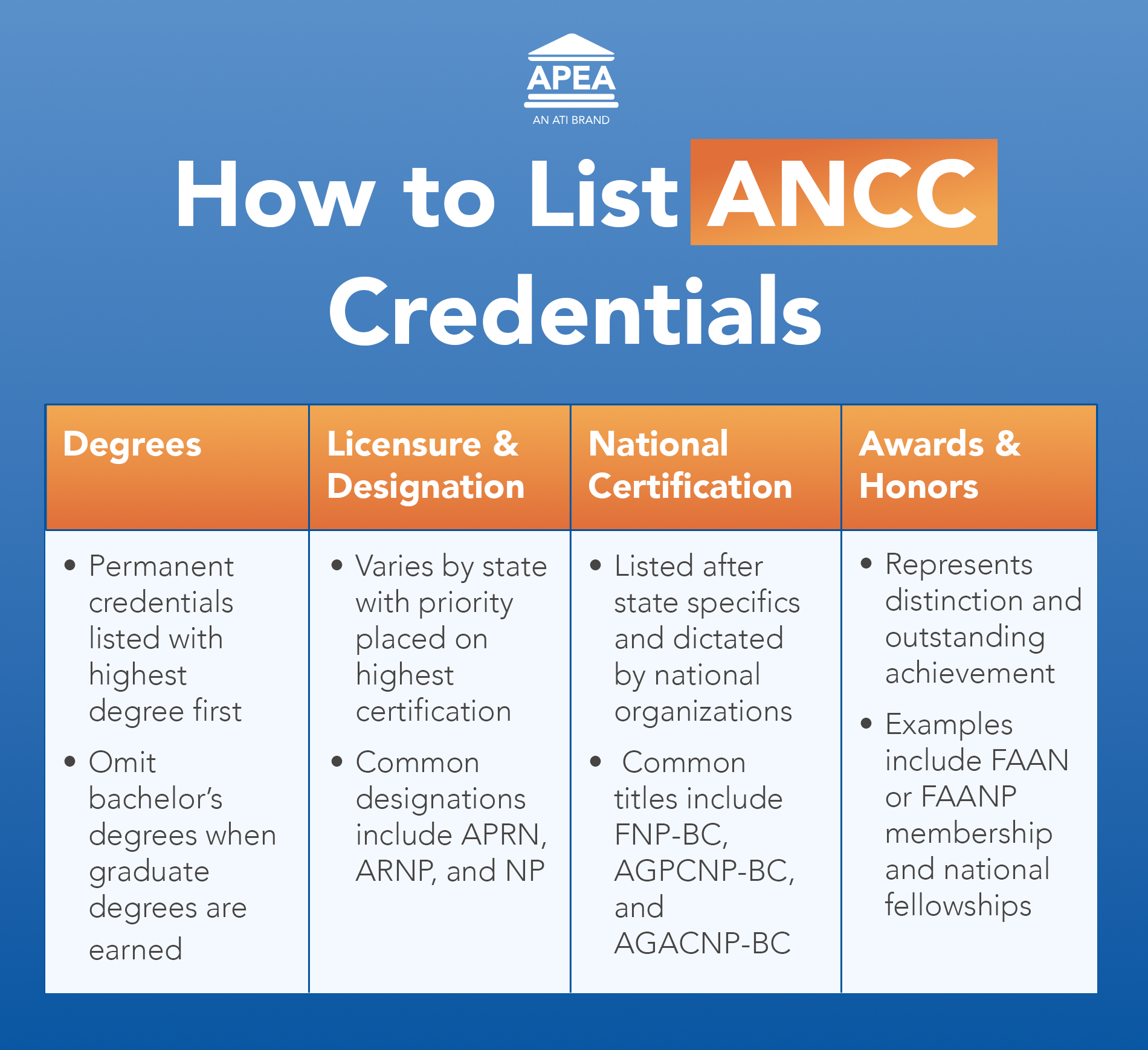
The ANCC credentials nurses at multiple levels and in multiple specialties. In its brochure for all nurses, How to Display Your Credentials, ANCC lays out all the specifics for accurately listing their brand of professional credentials. These guidelines follow the traditional order: degree, licensure, state designation, national certification, and awards/honors.
ANCC Recommendations
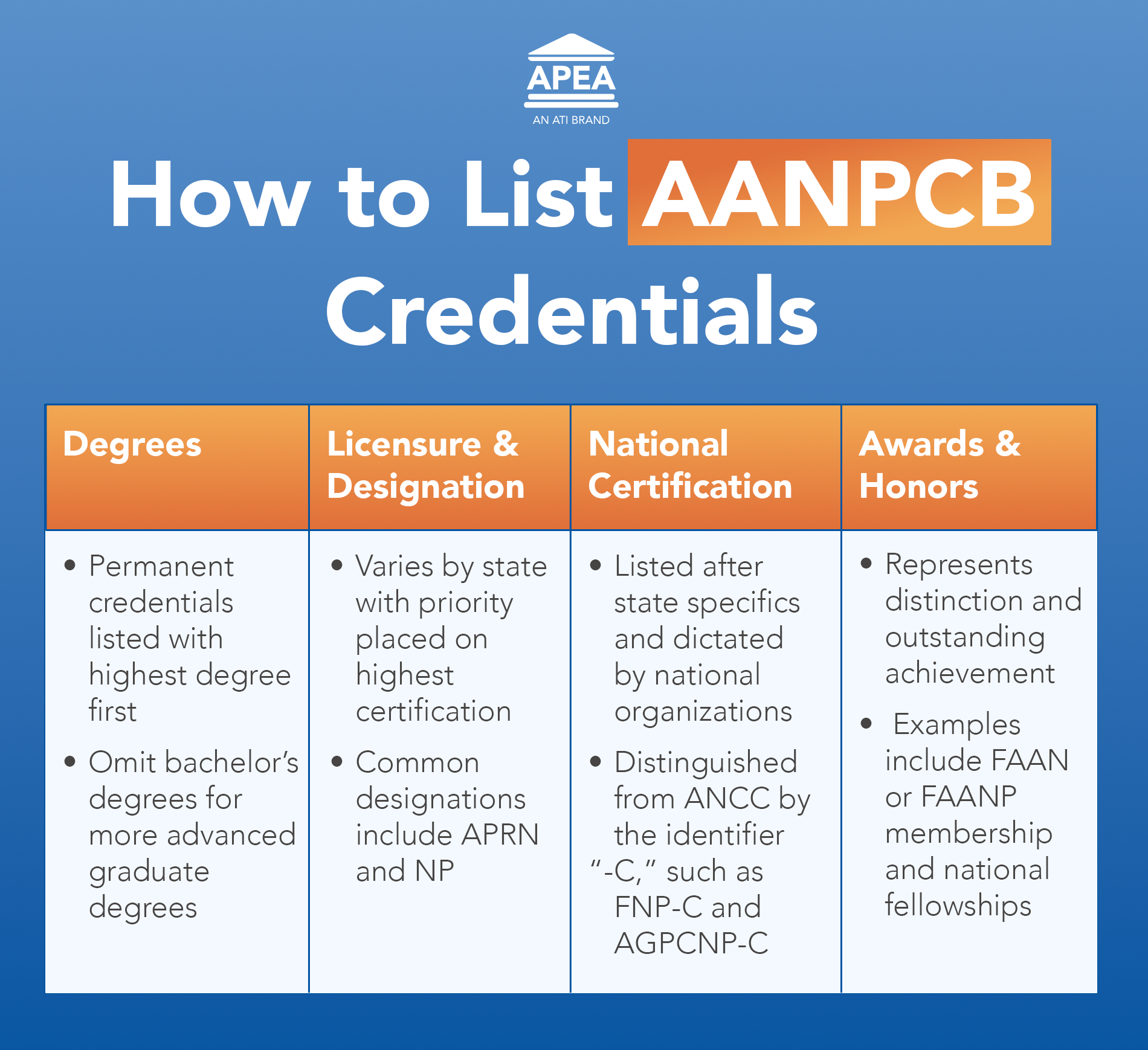
The AANPCB is a credentialing body for nurse practitioners. It provides slightly different recommendations for how to list NP credentials.
The traditional order is the same as ANCC: degree, licensure, state designation, national certification, and awards/honors. The primary distinction is that AANPCB denotes its certification with “-C,” whereas ANCC uses “-BC.”
The State-by-State Difference
Aside from your nationally issued credentials, some state have specific preferences and guidelines. These differences seem minimal, but they can have a big impact on whether or not an NP is correctly listing their credentials when practicing in that state. The unique restrictions placed on APRN is a perfect example:
- In Florida, the APRN designation is listed as ARNP.
- Similarly, Pennsylvania and West Virginia require the use of “CRNP.”
- Meanwhile, New Jersey and Illinois require the use of “APN.”
- On the other hand, California and New York don’t offer an APRN designation at all.
Need more insight? Take a closer look at certifying bodies for the individual state, or check out NCSBN’s resource for licensure guidance.
The Most Common Mistakes
1. INCLUDING SUPERFLUOUS DEGREES.
Guidelines emphasize only the most advanced degree in a field of coursework. EXAMPLE: A DNP supersedes both a BSN and MSN, replacing them both when listing degrees.
2. USING INCOMPLETE DESIGNATIONS.
All designations are exact and tailored precisely to the state or certifying body. EXAMPLE: ENP is an incomplete designation, whereas ENP-C is directly connected to AANPCB certification.
3. LISTING CREDENTIALS OUT OF ORDER.
All listed credentials should follow a set order: degree, licensure, state designation, national certification, and awards/honors. EXAMPLE: The traditional order is paramount and shared across certifying bodies. Listing certifications or awards prior to state specifics is against guidelines.
The Most Common Questions
1. “Is it OK to use FNP instead of FNP-C or FNP-BC?”
No — all AANPCB designations must be used in their entirety.
2. “Do I include RN once I become licensed as a nurse practitioner?”
No — advanced degrees replace their predecessors when listing credentials.
3. "What about multiple certifications or specialties?"
Multiple certifications follow all the same guidelines with preference from the individual regarding which is listed first.
Easy Tools for Every NP Challenge
APEA has a simple mission: prepare nurse practitioners to succeed. When it comes to evidence-based clinical practice, professional issues, point-of-care essentials, or billing and coding tips, APEA has resources to support your success. This credentials guide is one such tool for new NPs, and it’s one of many on-the-go resources for nurse practitioners that is backed by APEA’s 25+ years of preparing nurse practitioners for their careers.